
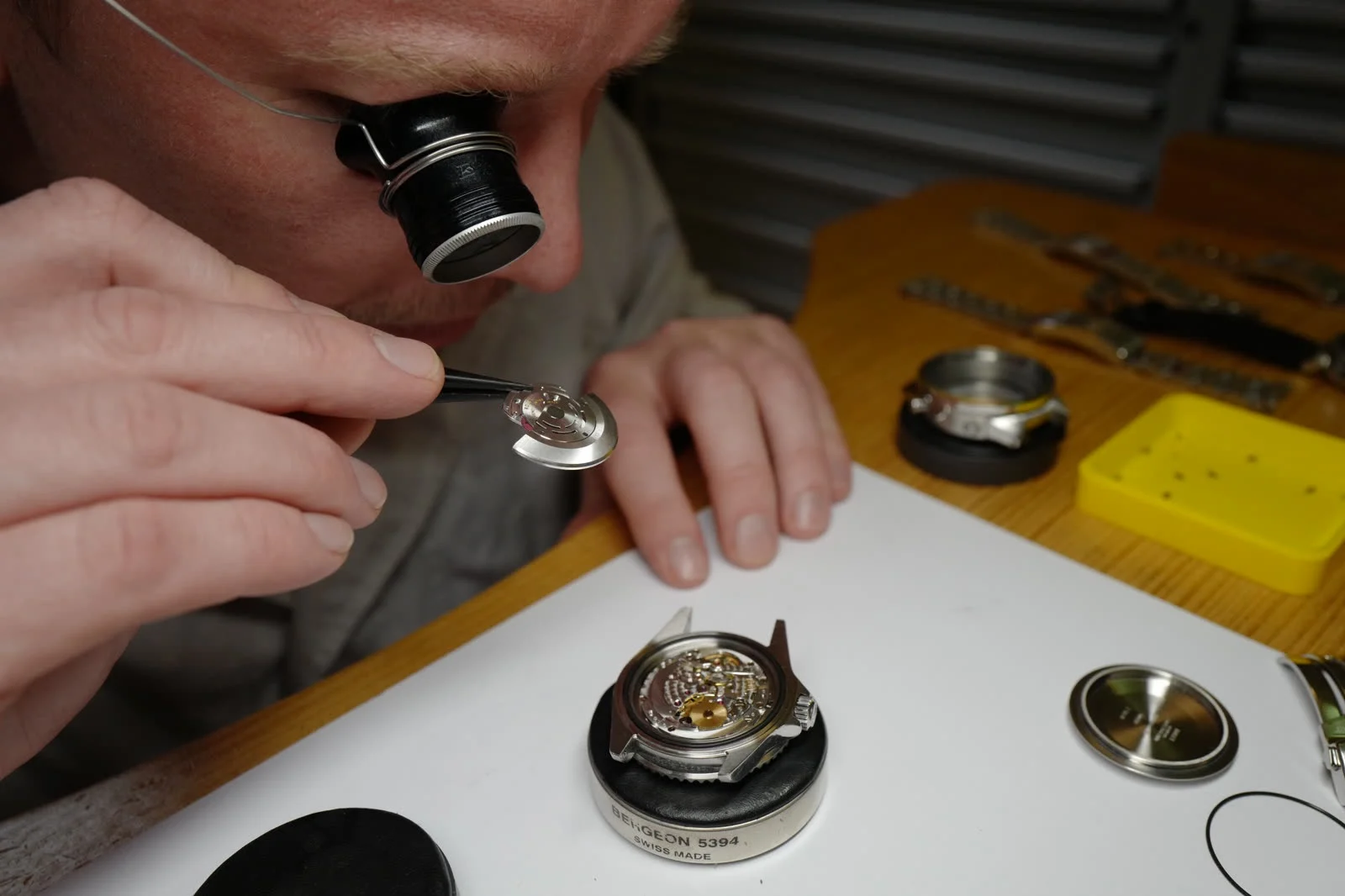
Clear photographs, matching numbers and a warranty card can help you understand a watch. None answers every question about the watch in front of you.
If you are trying to work out how to tell if a Rolex is real, start by separating the questions. Is it genuine? Which parts have changed? Has it been reported lost or stolen? And does the seller have the right to sell it?
You can use the available evidence to decide what needs checking before you commit. A reassuring answer to one question should not quietly become an answer to all four.
What are you actually checking?
Authenticity concerns whether the watch and the components examined are genuine. Originality concerns whether those components were fitted to this particular watch when it was first supplied. A part can be genuine and have been fitted later.
A lost-or-stolen database search is a separate check. So is establishing who owns the watch and whether the person offering it has authority to sell it.
Ask the seller or assessor to describe each finding plainly. A single word such as “certified” tells you little until you know who issued the document and what they checked.
What the evidence tells you
| Evidence | What it helps you examine | What remains open |
|---|---|---|
| Clear photographs | Visible condition, markings and the configuration being offered | Hidden components and whether the delivered watch matches the photographs |
| Serial and reference information | The claimed identity and model, compared with the documents | Whether the physical watch and its parts are genuine |
| Warranty card or original papers | The original transaction and identifying details recorded | Changes made later and the current seller’s authority |
| Service records | The work recorded for an identified watch on a stated date | What happened after that service |
| Physical inspection report | Findings from the actual examination, within its stated scope | Any excluded checks, uncertain history or ownership questions |
Keep copies of the listing and the documents you receive. If something differs between them, ask for an explanation before paying.
A Rolex serial number is a starting point
A number on a watch can be compared with its documents. That comparison is useful, but it does not examine the movement, dial or other components. A plausible lookup result is therefore not an authentication of the whole watch.
Treat a serial-number chart as a reference aid. Ask what its dates are based on and how precise they can be. If a seller uses the result as the main proof of authenticity, the physical watch still needs its own assessment.
If the records leave you unsure, ask us about an in-hand assessment and what it can establish for the watch you are considering.
What if a Rolex has no papers?
Missing papers leave a gap in the records. They do not, by themselves, establish whether the watch is genuine.
Ask what is available instead: an earlier purchase invoice, service invoices and a current examination. These records have different purposes, so read what each actually says. Rolex states that its original guarantee card cannot be reissued. [1]
A Rolex Service Card has a different role. It records a full service through a Rolex authorised service centre and carries the associated service guarantee. It is not the original purchase card. [2]
If you are preparing to sell, our checklist for selling a Rolex without box and papers explains which records to gather.
Use the correct model, not a universal checklist
Simple rules can sound convincing until a genuine model breaks them. For example, Rolex lists a transparent caseback for the Land-Dweller 40, reference 127334. A blanket claim that every transparent Rolex caseback means a fake is wrong. That does not make a transparent back correct for every other model. [3]
The useful comparison is with the correct reference and configuration. A quick look at the seconds hand, the weight in your palm or one dial detail cannot answer questions about the complete watch.
Genuine parts and original parts are different
Rolex describes using genuine replacement parts when needed in its Certified Pre-Owned programme. That is a clear example of why genuine does not always mean unchanged since new. [4]
Ask which parts have been replaced and what evidence supports that description. If an aftermarket part is identified, ask who made it and how it affects the assessor’s conclusion. Aftermarket means made outside the original manufacturer’s supply. It does not tell you which part changed or how the rest of the watch was assessed.
A clean database search has limits
The Watch Register says its database does not contain every lost or stolen watch. A result reflects the information available at the time of the search. Its certificates do not confirm authenticity, and its terms call for separate seller, ownership and authenticity checks. [5]
Ask which database was searched, when it was searched and which identifier was submitted. If a concern remains, pause the transaction while it is resolved.
What to ask before a physical inspection
Before arranging Rolex authentication, ask what the assessment includes:
- Will the actual watch be examined, including its internal components?
- Will the report distinguish genuine parts, later replacements and uncertain findings?
- Will it cover condition, documents or database searching, and which checks are separate?
- What will you receive in writing, what is the fee, and when is it expected?
An independent report records the examiner’s findings. It should be clear about its scope and should not be presented as a Rolex-issued certificate.
Sources
These references support the facts discussed above. Manufacturer, platform and government terms apply within their stated scope.