
A watch can look immaculate and still leave you with questions. Here is how to look beyond the shine and understand the example you are buying.
You want a watch you will enjoy wearing. You also want to understand what you are paying for.
That gets harder when one listing says “unpolished”, another says “professionally refinished”, and both watches look excellent. How much should those descriptions influence your decision?
A polished Rolex can still be worth considering. Look at the condition of the individual watch, find out what work has been done and decide whether it suits the way you collect. An “unpolished” description deserves evidence too.
Start with a distinction that is easy to miss: a watch’s appearance today and its history are two different things. You need to understand both.
What does “polished” actually mean?
In a pre-owned listing, polishing usually refers to cosmetic work on the case or bracelet. Mechanical servicing is a separate question. A bright case tells you little about how recently the movement was inspected.
Polished
The case or bracelet has been refinished. Ask about the method, extent and result.
Over-polished
Refinishing has removed enough material to alter the intended shape or detail.
Unpolished
A claim about the watch’s past. Ask what supports it, beyond a sharp-looking photograph.
Rolex itself describes re-polishing or satin-finishing the case and bracelet, on request, within its service procedure. Polishing alone is therefore not a reason to dismiss a watch. The quality and extent of the work matter. [1]
When you compare a polished vs unpolished Rolex, keep the reference and generation in view. A case should be judged against the right example, rather than a general idea of what every Rolex ought to look like.
A sharp case can have a restoration history
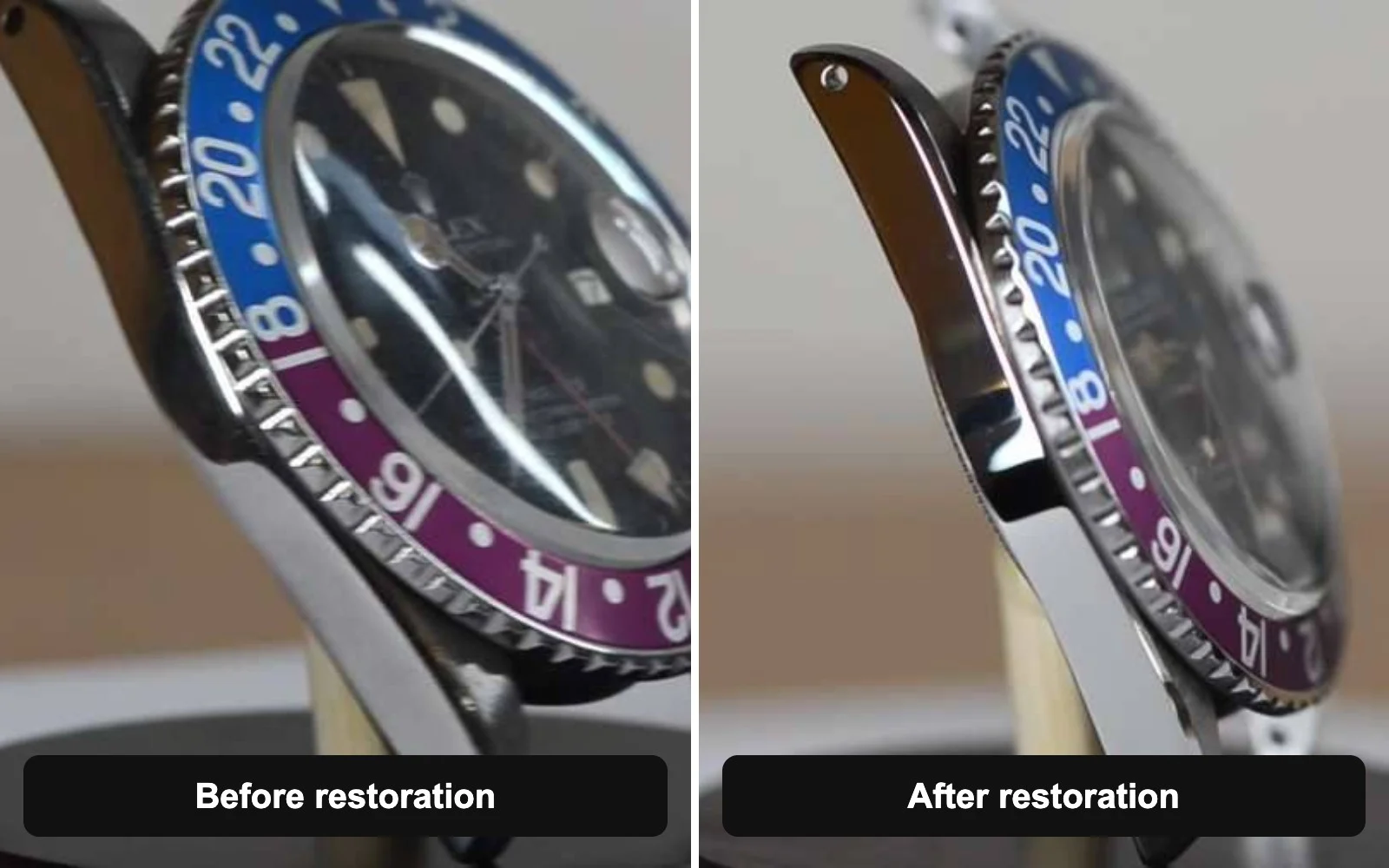
These photographs show a GMT-Master 1675 before and after work at Watch Collector. Our restoration record on the website describes laser work, CNC cutting and hand refinishing. [2]
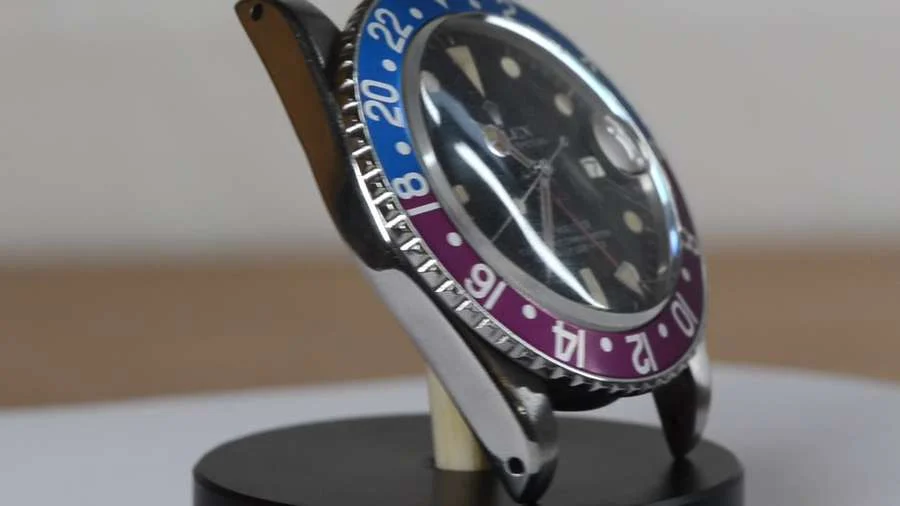
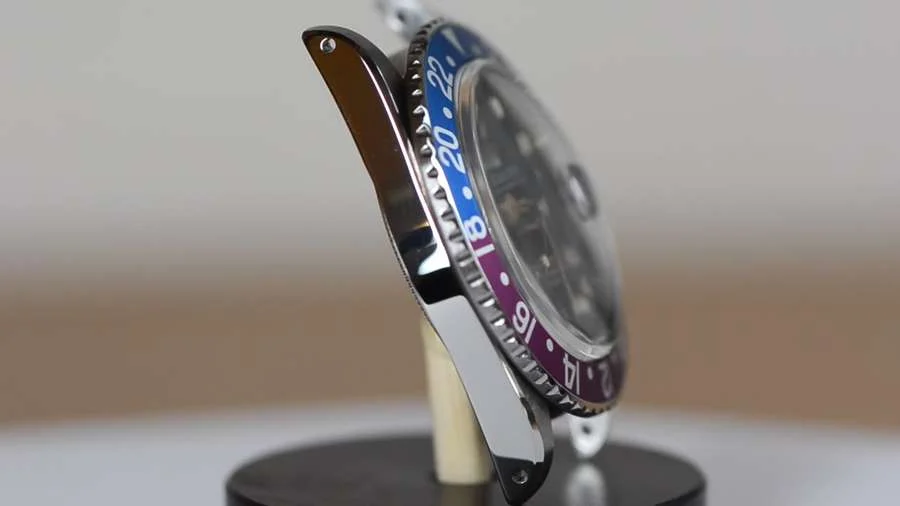
The turntable angles differ. These images illustrate the recorded work; they are not a dimensional measurement or a complete history of the watch.
- The watch
- Rolex GMT-Master 1675
- Published work
- Laser work, CNC cutting and hand refinishing
- The buyer’s question
- What was done, which components were affected, and what records accompany this particular watch?
If a listing mentions watch laser welding, ask which parts were worked on and what records are available. The recorded work on this GMT-Master includes laser work, CNC cutting and hand refinishing. Sharp edges alone do not establish an untouched case. [2]
A restoration may suit the watch and its owner. For a buyer, the useful information is a clear account of what changed. Ask about earlier work too, and accept “unknown” as different from “never done”.
Ask for the story behind the finish.
Explore more watch restoration examples from our Melbourne workshop.
How to tell if a Rolex has been polished
Photographs can reveal reasons to ask a closer question. They cannot certify a watch’s entire history. Use them to decide what you need to see or have examined before committing.
-
Compare the case with the right reference
Look at the lugs, case sides and crown guards where fitted. Ask for clear views from above and from both sides. Rounded transitions or uneven proportions can warrant investigation. Different references and production periods can have different shapes.
-
Look for detail, then ask about it
Bezel definition, engravings and the areas around drilled lug holes can help frame questions about an over-polished Rolex. Avoid declaring a watch original or damaged from one flattering or poorly lit image.
-
Separate case condition from dial originality
A well-presented case does not tell you whether the dial or hands have been replaced. If a listing mentions a Rolex service dial, ask when it was fitted and what records are available. Rolex describes fitting genuine replacement components when required in its Certified Pre-Owned programme, which illustrates why genuine does not always mean unchanged since new. [3]
-
Include the bracelet and movement
Check the bracelet’s fit and completeness, ask about wear and find out what service information exists. A cosmetic refresh should not end the discussion about the rest of the watch.
Want to understand a watch’s condition before deciding? Talk to our Melbourne team about the example you are considering.
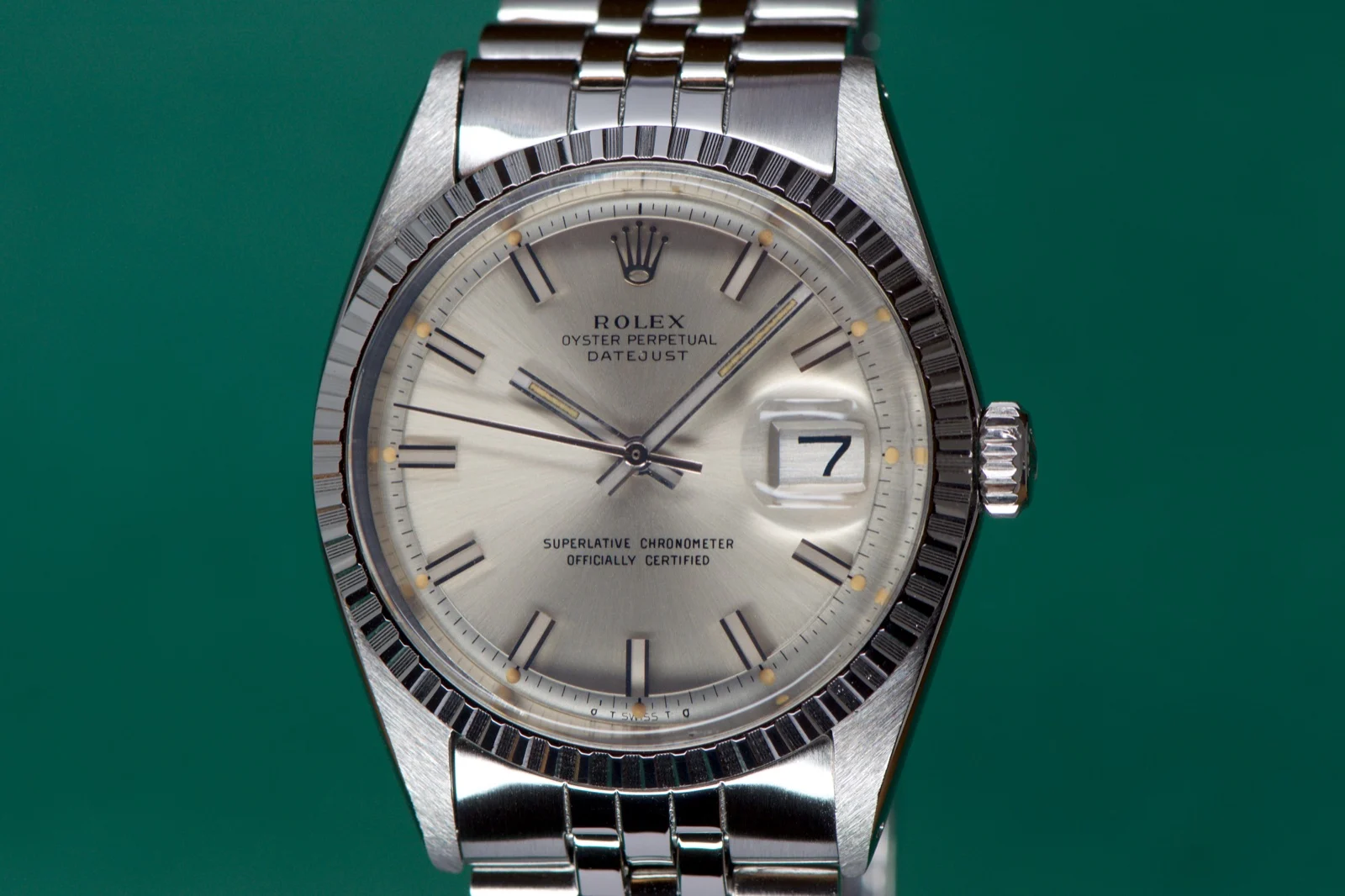
Considering a watch with Rolex bracelet stretch? Ask what assessment or repair has been carried out. If work is still needed, seek a quote for that bracelet before comparing the total purchase cost with another watch.
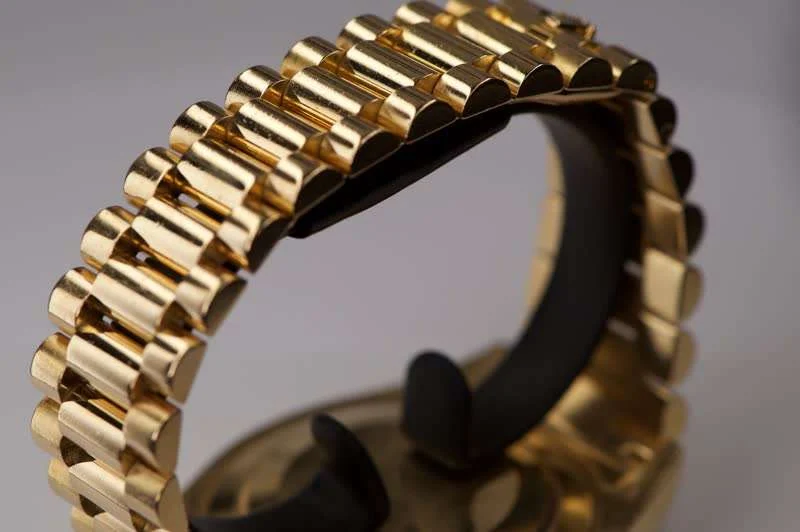
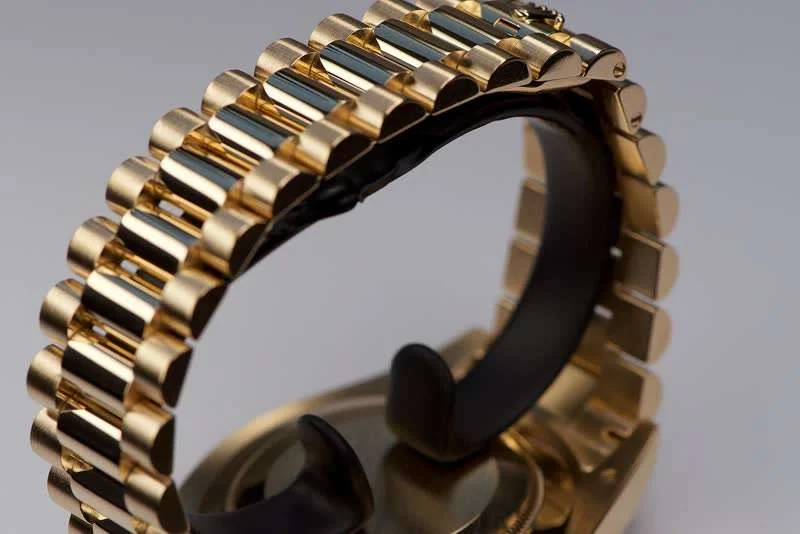
President bracelet from our restoration archive. These photographs show its appearance before and after the recorded work. They do not quantify internal wear or establish a repair price. [2]
Which watch would you rather own?
An unpolished Rolex and a documented restored example can appeal to different buyers. Set your priorities before allowing a label to make the decision for you.
If originality comes first
Ask for evidence of the case, dial, hands and bracelet history. Be prepared to investigate apparently untouched condition as carefully as disclosed restoration.
If you want a watch to wear
Consider how the individual watch looks, fits and runs. Decide what past work you are comfortable with and whether the asking price makes sense for that example.
There is no reliable blanket discount to apply to every polished Rolex. Compare watches of the same reference and account for the dial, accessories, provenance, service condition and extent of any restoration. Asking prices and completed sales are different evidence.
If you are paying a premium for an untouched example, make sure the evidence supports that premium. If you like a restored one, make sure you understand the work you are accepting. Either way, the decision should be informed.
Ask the questions that a listing cannot answer
If you are comparing a pre-owned Rolex online, a short, specific request is a useful next step. Ask for the history the seller knows, the evidence they have and any gaps they cannot resolve.
A message you can use
Could you confirm whether the case or bracelet has been polished, re-cut or laser-restored? Have the dial, hands or other components been replaced or refinished? Please send the available service records and clear photographs of the case from both sides. What is known about earlier work, and what remains uncertain?
If the answers leave an important question open, ask about an in-hand authentication assessment before buying.
Before you decide
Should I buy a polished Rolex?
It can be a suitable choice if the condition, disclosed work and price fit your priorities. Establish the extent of the refinishing and consider the entire watch. The word “polished” alone is not enough to make the decision.
Does a sharp case prove a Rolex is unpolished?
No. Skilled restoration can change a case’s appearance. Use the visible condition alongside the seller’s account, available records and an appropriate examination.
Does Rolex polish watches during servicing?
Rolex describes re-polishing or satin-finishing the case and bracelet on request in its service procedure. Check the scope of work proposed for your individual watch. [1]
Will polishing always reduce the value?
A universal deduction would ignore the reference, condition, originality, rarity and buyer’s preferences. Assess comparable examples and the work involved rather than applying a fixed percentage.
Sources and photographs
The photographs belong to the Watch Collector workshop archive. The references below support the distinctions discussed in this guide; they do not authenticate an individual watch.